Showing posts with label Disabilities in the community. Show all posts
Showing posts with label Disabilities in the community. Show all posts
Tuesday, December 13, 2016
Mayim Bialik spent a shabbos with kids with disabilities
http://www.kveller.com/mayim-bialik-why-spending-shabbat-with-people-with-disabilities-was-so-profound/
A few weeks ago, I was a guest at a Shabbat retreat (called a Shabbaton) at a synagogue near my house. I was invited by an organization called ETTA to experience the community they create for individuals with disabilities.
ETTA was started almost 25 years ago. They have five group homes in the Southern California area and they support activities and events that help individuals learn life skills and build confidence while participating in rewarding job, social, and recreational activities, including summer camps and Shabbat experiences such as the one I attended.
What’s special about ETTA is that the volunteer base for the organization is made up of many teenagers in the community who learn how to serve communities with disabilities. This approach to serving the needs of individuals with disabilities not only helps those in need, but it facilitates a community awareness of differences and raises a generation of teenagers who have learned sensitivity, skills, and compassion in a very meaningful way.
What I saw when I attended the Friday night portion of this Shabbaton was about 50 young adults with special needs accompanied by enthusiastic and supportive teenagers and adults who helped us all come to Shabbat services to pray together. Then we had a festive dinner which started with making the blessings over the wine and grape juice and the challah, and singing songs to welcome Shabbat in together.
There was a variety of young people with disabilities there at various levels of comfort; some were very shy and needed gentle coaxing to participate at their comfort level, and others were very outgoing, ready to answer questions the leaders asked about what’s something they were grateful for and what ETTA has done for their lives. There were some who needed a lot of guidance, and I was especially touched to see teenagers working so tenderly with those participants, speaking to them gently and assessing their comfort as the evening progressed.
I have so many memories of Shabbat dinners at camp which looked a lot like this: an over-excited leader getting everyone in the Shabbat mood who would invariably lose his voice by Saturday night because of his enthusiasm in leading us in song and prayer; the anticipation of what activities would be planned for a group of eager participants all weekend; the undeniably “Jewish” feeling you get when surrounded by a room full of people all singing songs together—even if you don’t know the words, you can “lai-la-lai-lai” along and feel part of something.
It was dinners and weekends like these when I started feeling part of something bigger than myself. They were about identifying something as positive rather than what other people may see as negative. It was finding the uniqueness in my Jewishness in a world and a country that may not always seem like they “get” us. That’s how I remember my camp time and my early experiences with Shabbatons. It’s profound.
And how critically important this is for individuals with special needs in particular, who may be marginalized and rejected by mainstream society or left out of conventional Jewish practice; who look different and act different in ways many of us can’t even fully comprehend.
I am so grateful ETTA and other organizations like ETTA exist; not only for the individuals with disabilities who they serve, but for those of us who get to volunteer, participate in their learning and their joy, and remember again how sweet it is to be loved and included and appreciated—how good and pleasant it is to sit together as part of the same family of humanity as Jews.
ETTA has a Gala fundraiser in Los Angeles on December 13. Please consider attending or donating to support their wonderful work. Visit their website http://www.ettagala.org/ for more information.


Sunday, October 30, 2016
Boy with down syndrome lands Osh Kosh B'gosh gig after being turned down by talent agency
http://fox4kc.com/2016/10/28/boy-with-down-syndrome-gets-oshkosh-bgosh-gig-after-talent-agency-rejected-him/
BUFORD, Ga. – A Georgia mother is celebrating Friday after learning that her son, who has Down syndrome, has been offered a spot in a 2017 Carter’s ad campaign, according to WXIA-TV.
The offer is especially sweet for mom Meagan Nash, who says the talent agency she hoped would help her son, Asher, get the job, declined to even send out his photos.
What bothered Megan Nash wasn’t that a talent agency turned down her 15-month-old son. It’s the reason they gave.
The agency told Nash it wouldn’t be submitting the boy’s pictures because they didn’t fit the casting criteria.
Nash was confused. Did the casting specifically say ‘no children with special needs?’ she asked the agent.
Well, no, but the agent just assumed the company wouldn’t want a child with special needs, she was told.
(CNN was able to verify the interactions after seeing the email exchanges).
Frustrated, Meagan posted Asher’s pictures on the Changing the Face of Beauty Facebook page, with a message about how national brands likely never realize that photos of special needs kids aren’t being submitted from casting calls.
“We aren’t giving up! This handsome boy is ready to show the world what #changingthefaceofbeauty is!” she wrote.
A popular page called “Kids With Down Syndrome” reposted her note and it has since been shared over 124,000 times.
“It’s important to feature people with special needs in advertisement for three reasons. The first reason is inclusion. People with disabilities want to be included amongst their peers in life in general and being seen in advertisement is a part of that,” Nash told CNN.
“The second reason, which is very near and dear to my heart, is acceptance. Without truly accepting my son and others with special needs, there can be no inclusion for them in the future.
“And the last reason is respect. Using people with special needs shows the world that these people have value and worth just like any typical person does.”
Shortly after Nash’s Facebook post went up, OshKosh B’Gosh, a subsidiary of Carter’s, contacted the family to set up a meeting with Asher.
“I don’t want [OshKosh] to use him because of this fuss we are making on the Internet. I want them to use him because they value him and see how much he could contribute to their advertisement” Nash said.
Tuesday, July 12, 2016
Special in Uniform
I am now representing this organization and raising money for it if you are interested in getting in touch
Wednesday, June 29, 2016
10 tips for creating a more inclusive religous organization
http://www.huffingtonpost.com/jennifer-laszlo-mizrahi/10-tips-for-creating-inclusive-religious-organizations_b_6943718.html
Jenifer Laszlo Mizrahi
President, RespectAbilityUSA.org
Jenifer Laszlo Mizrahi
President, RespectAbilityUSA.org
Ilia Torlin via Getty Images
We are a stronger country when religious organizations of all faiths live up to our values — when we are welcoming, diverse, moral, and respect one another. People with disabilities and our families have the same hopes and dreams as everyone else, even if they face different challenges.
However, as we approach major religious holidays and the eve of the 25th Anniversary of the Americans with Disabilities Act (ADA), it’s important to remember that faith-based organizations were exempted from the ADA. Thus, many churches, synagogues, mosques and other religious organizations are not yet fully inclusive of people with disabilities.
This is a big challenge as fully one in five Americans (56 million Americans) has a disability. Thus, by ensuring that those who want to be a part of the community are welcomed, respected and valued, we can be a stronger and better nation.
Together we can build more inclusive faith-based communities where our children, parents, grandparents, and other family and friends with disabilities have an equal opportunity to fully participate. Here are 10 tips to do just that:
1. Communicate that all people are of equal value and are to be respected and openly welcomed. Clergy and CEOs of religious organizations, lay leaders, philanthropists, and faith-based media all set the vision, mission and tone of faith-based communities. Leadership must be intentional, not accidental. Inclusion of all must be embedded in policies, budget, staffing and practice.
2. Work with people with disabilities, not for them. People with disabilities want a seat at the table and to be involved in decision-making. If there are no people with disabilities participating in your decision-making process, invite them in. Value their experiences and opinions. Even people who are unable to speak have opinions that must be shared and heard. Remember the mantra: Nothing about us without us. And keep in mind that people with disabilities don’t want to be objects of pity — they want to contribute to making this world a better place, just like anyone else.
3. Take the time to learn “people-first language,” which respects human beings and their rights to be appreciated for the strengths they have, rather than to be defined by their disabilities. An example of people-first language is referring to a child with Down syndrome by his or her name, not “the kid with Down syndrome.” Or, worse yet, the “Down-syndrome kid.” A person who uses a wheelchair is a person first. Their wheelchair is a tool of liberation, and he or she is not “wheelchair-bound.” People-first language puts the focus back on people by speaking of “people with disabilities” (PwDs), not “handicapped” or “the disabled.” It costs nothing to use different language and it goes a long way to making people feel respected and valued.
3. Take the time to learn “people-first language,” which respects human beings and their rights to be appreciated for the strengths they have, rather than to be defined by their disabilities. An example of people-first language is referring to a child with Down syndrome by his or her name, not “the kid with Down syndrome.” Or, worse yet, the “Down-syndrome kid.” A person who uses a wheelchair is a person first. Their wheelchair is a tool of liberation, and he or she is not “wheelchair-bound.” People-first language puts the focus back on people by speaking of “people with disabilities” (PwDs), not “handicapped” or “the disabled.” It costs nothing to use different language and it goes a long way to making people feel respected and valued.
4. Ensure all program registration and sign-up forms include questions about accommodations people may need to fully participate. Not all programs can meet every need, but often all we need to do is ask. Starting such conversations lets people know you care about including them. When participants indicate they need an accommodation (i.e. sign language, more time to transition from one activity to another, extra tutoring etc.) their forms must go to the inclusion director/coordinator so he or she can ensure that their needs can be met. If you have a question about what a person with a disability needs in order to participate in a program, the solution is easy: ask them!
5. Trust is vital — and must be established before even meeting face to face with a person with a disability. How can you do this? Go beyond encouraging people to share their needs on registration forms. When people share their needs, respect their privacy by treating it just as you would healthcare information. Also, those working with children with disabilities will find that parents can be your best assets: they are already experts in meeting their children’s needs and can help you serve them successfully.
6. Spread the word in your marketing and social media that all people - with and without disabilities — are welcomed and appreciated. Showcase photos of people with disabilities enjoying your programs next to their “typically developing” peers. This sends a message that all are welcomed and valued. Websites, Facebook, Twitter and media can be important tools for sharing your values and what you offer. Post your diversity policy on your website and ensure it states that you are open to all, regardless of ability. Work to make your website easy to navigate and accessible to people who are blind and deaf. Post all of your videos on YouTube, which helps people who are hearing-impaired by creating free captions.
7. Inclusion is a lot less expensive than most people think, but it still takes the right team and training to do it effectively. All religious organizations, schools, camps and other institutions should have trained staff or provide effective training for existing staff in order to achieve success. Also critical is making changes to buildings so they accommodate those with disabilities. Professional training sessions and materials are vital to prepare staff and community for successful inclusion, and much of it is available online and for free.
8. Provide an inclusion director/coordinator to ensure your organization is ready to meet the needs of community members with disabilities. This does not need to be expensive. Trained professionals can be hired on a part-time basis and many people are willing to work as volunteers. Numerous special educators, therapists and social workers working in public schools or other institutions may be available to work, consult or volunteer part-time.
9. Make a commitment to enable people with and without disabilities to develop peer relationships, build social skills and respect and accept each other. In many institutions, one-on-one counselors and educators who provide support to children with more involved disabilities may mistakenly think their job is to be a child’s best friend. It’s not. Their role should be to “aid and fade” so that children with disabilities can make friends with their typically developing peers, and children without disabilities can enjoy diverse friendships as well. Moreover, it’s not a staff member or counselor’s job to fix every problem or constantly hover over participants. Instead, they should help children or adults with disabilities discover solutions on their own. At times a teacher or counselor will need to assist people with disabilities, either physically or in a conversation to meet their needs. But once the immediate need is met, it is important that people are given the space to be as independent as possible.
10. Put diverse and qualified people with and without disabilities on your staff, board and committees. Non-profit and for profit agencies alike should reflect the people they serve. This includes being models for involving qualified people with disabilities. In addition to developing programs with people with disabilities, they should also employ them and make use of their great talents. Organizations can encourage their members to offer internships to young people with disabilities or serve as ‘job coaches’ to help teens with disabilities get on track to a life of independence and success.
10. Put diverse and qualified people with and without disabilities on your staff, board and committees. Non-profit and for profit agencies alike should reflect the people they serve. This includes being models for involving qualified people with disabilities. In addition to developing programs with people with disabilities, they should also employ them and make use of their great talents. Organizations can encourage their members to offer internships to young people with disabilities or serve as ‘job coaches’ to help teens with disabilities get on track to a life of independence and success.
We all have hopes, dreams, and a desire to contribute to making a better world. By being intentional about opening our doors to all people no matter their differences, everyone benefits. Each person with a disability, just like those without disabilities, has strengths, purpose, equal value and a place in the community.
Tuesday, June 28, 2016
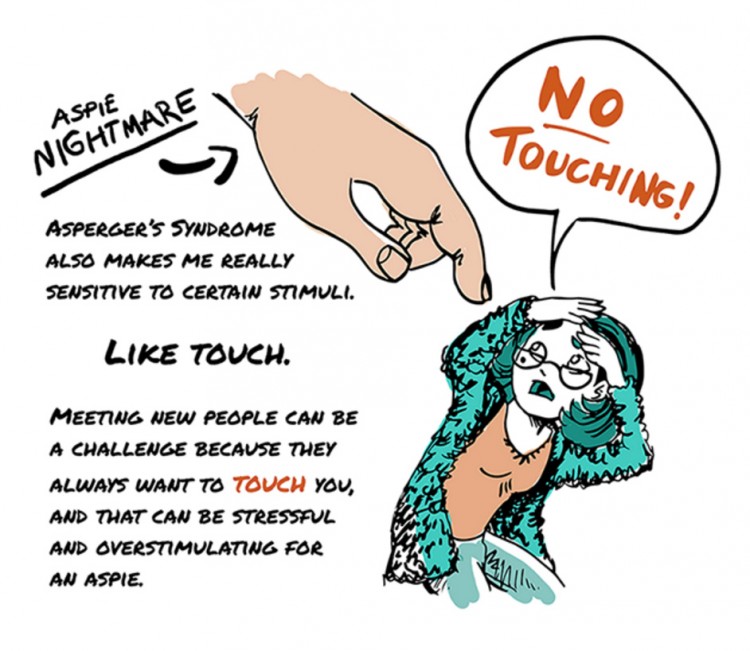
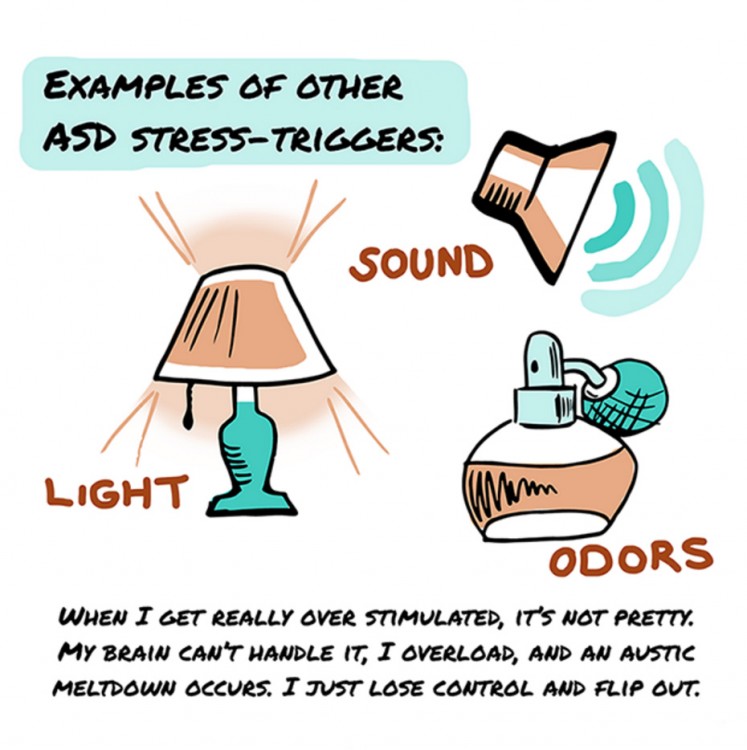
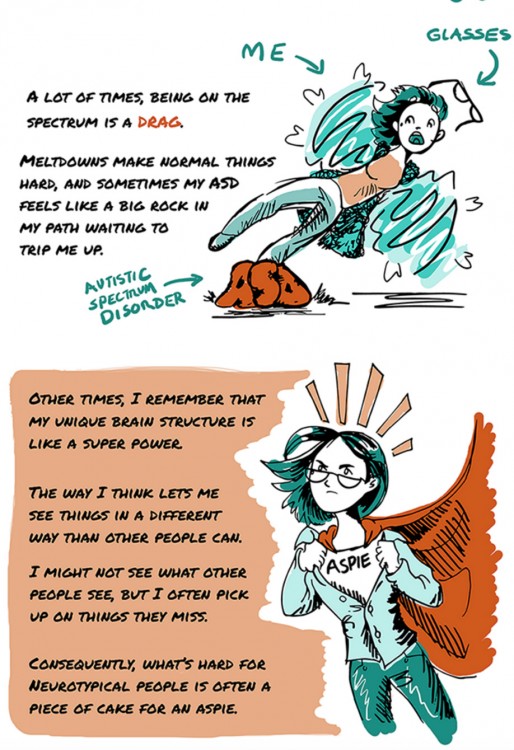
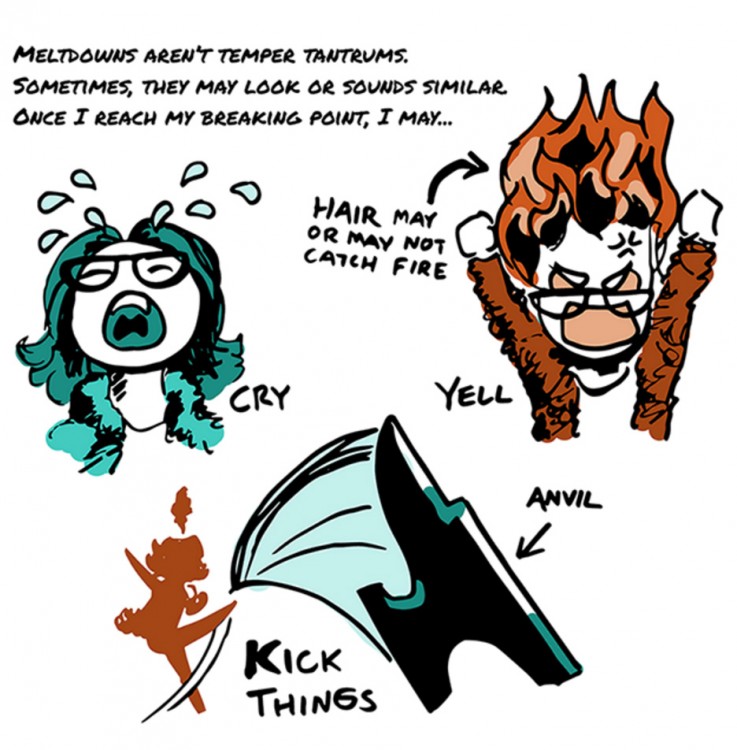
Student creates comic about aspergers
http://federalstudyresearch.com/student-creates-comic-series-to-explain-her-life-with-aspergers/
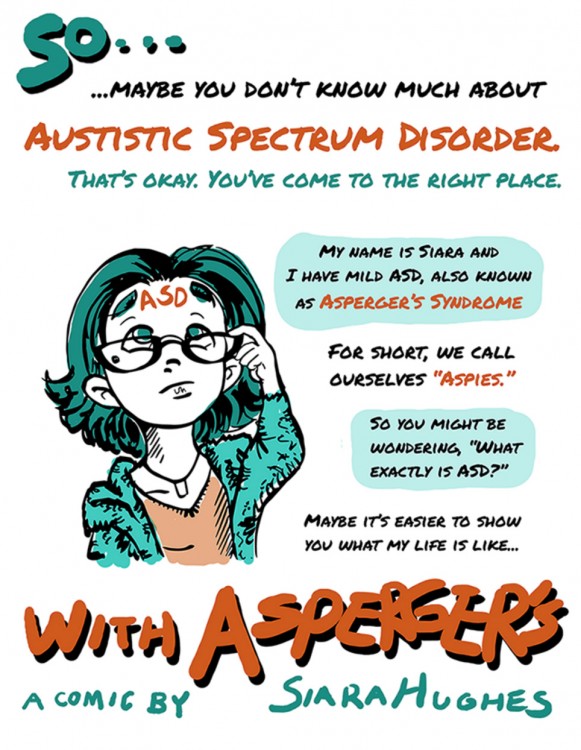
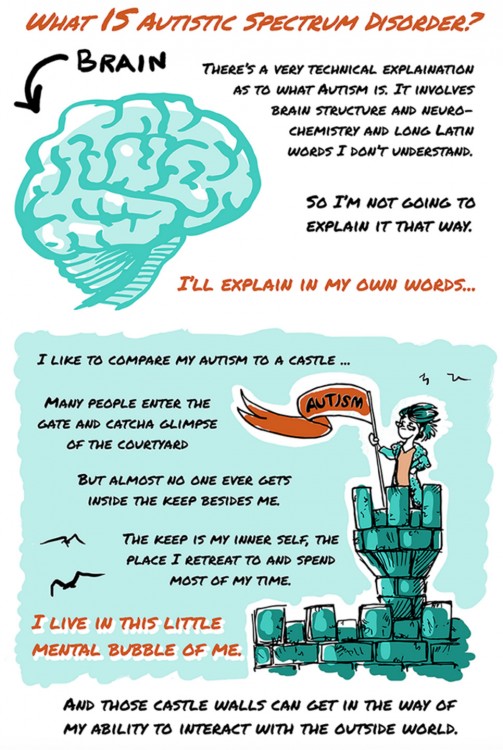
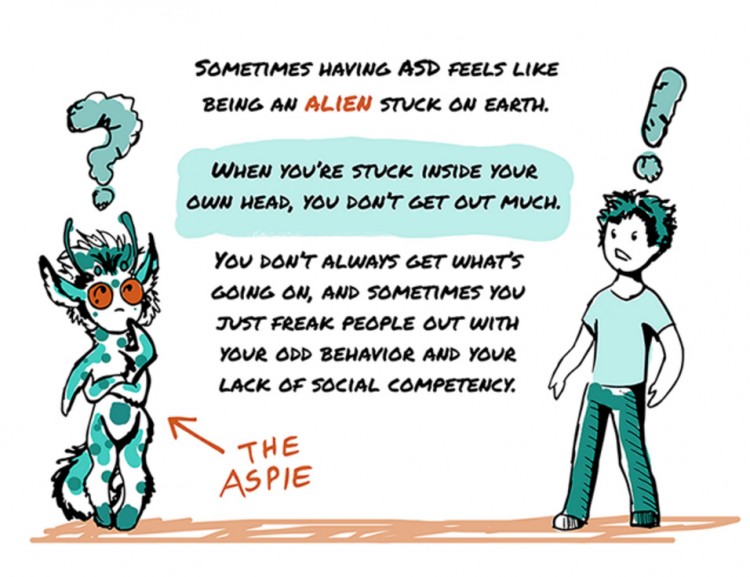
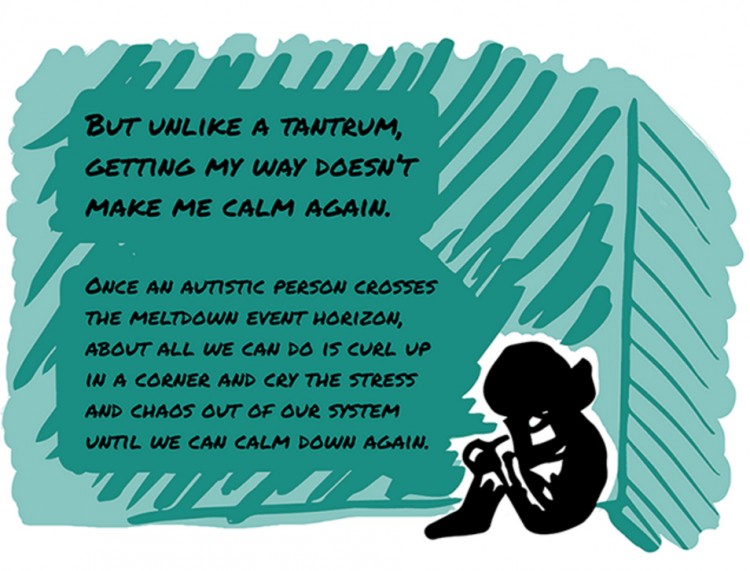
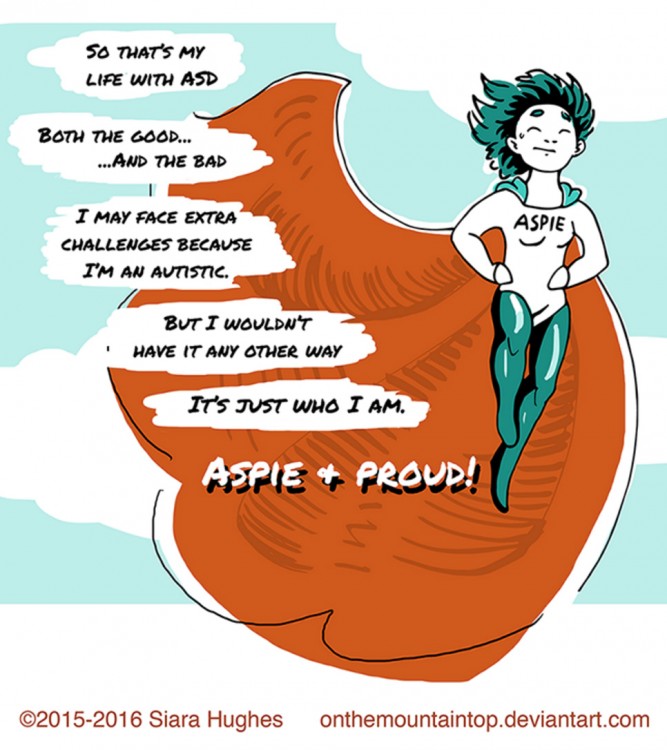
Student Creates Comic Series to Explain Her Life With Asperger’s
UNCATEGORIZED June 28, 2016 No Comments on Student Creates Comic Series to Explain Her Life With Asperger’s 375
Siara Hughes studies graphic design and visual communications at Highline College in Des Moines, Washington, and for one of her final projects last quarter, she decided to produce a comic strip focused on her life with Asperger’s syndrome.
“I really wanted to tell a story that would help me explain myself, what autism means for me, what my struggles are, and how I’ve had to work through them,” she told The Mighty.
“This comic is the culmination of dozens of hours of work, lots of frustration, a couple of tears, and an earnest desire to explain myself to other people,” she added on her DeviantArt page.
Hughes, 21, told The Daily Dot she diagnosed herself with Asperger’s after identifying with an autistic character in a book and then doing research. When her younger brother was diagnosed with autism, she noticed a number of similarities between the two of them, and found an explanation for how she’d been feeling.
“Watching him go through the daily challenges of school while having them compounded by ASD reminded me of my own childhood struggles and became a sort of inspiration for the project,” she told The Mighty.
Editor’s note: These comics are based on one person’s experience.
Hughes is sensitive to light, heat and touch, and she finds eye contact difficult. Hughes said she’s known she was different for quite some time, but it wasn’t until she learned more about Asperger’s that she began to feel understood.
“If I’m going to understand someone else and befriend them and interact in a positive way, I need to get inside their psyche and understand what’s going on under there,” she told The Daily Dot. “I want to be able to communicate, I want to be able to understand people, and it means I have to learn how to do it.”
So far, Hughes has received a very positive response to the project. “When I turned in the story board, my teachers got really excited about it and asked me if I’d make a poster version for Student Services on campus,” she told The Mighty. “I then decided to adopt the eight-panel story board into a 12-panel webcomic that more completely told the story. I first posted the comic about two weeks ago on DeviantArt and it’s gotten more feedback than just about anything I’ve every posted.”
Hughes also opens up about meltdowns, and how stressful they can be for her.
“The meltdowns don’t happen on cue,” she told The Daily Dot. “I don’t will them to happen; I will them not to happen. I don’t like falling apart in public.”
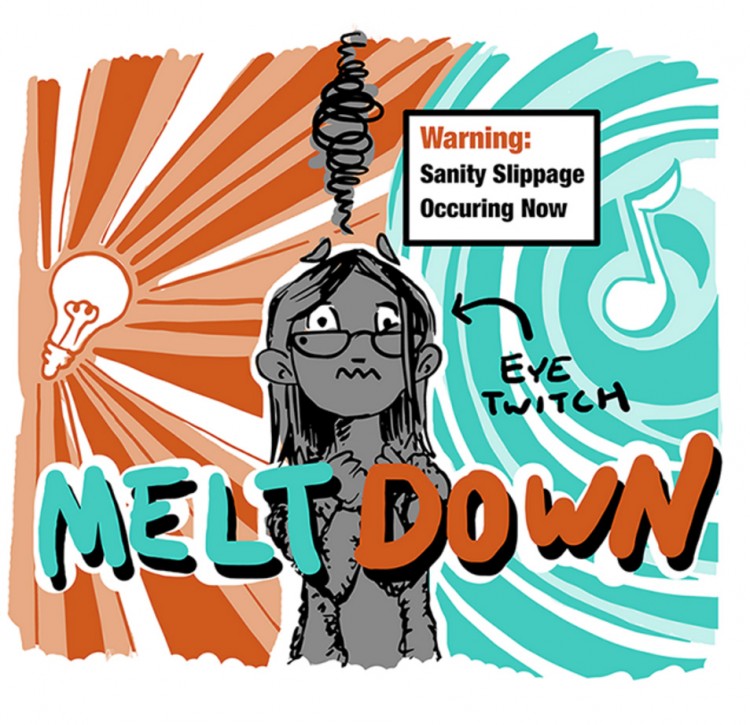
“My goal in all of this is just to help people understand,” she told The Mighty. “To understand me, my little brother, and all the other high functioning autistic people out there like us. And maybe to help us better understand and explain ourselves.”
Friday, June 24, 2016
Disabled in prision
Tonight, we look at a part of the criminal justice system that tends to get less attention, prisoners with disabilities.
Judy recorded this conversation yesterday.
JUDY WOODRUFF: A new report breaks down public data to outline the scope of the issue.
It says more than 750,000 people with disabilities are behind bars in the U.S., including more than half-a-million with cognitive impairments, at least 250,000 with mobility problems, and 140,000 who are blind or have vision loss.
The report was issued by a nonprofit disability group known as RespectAbility, which also hopes to cast a spotlight on what happens to individuals after they leave prison.
Jennifer Laszlo Mizrahi is the president and CEO of this group, and she joins me now.
Welcome to the program.
JENNIFER LASZLO MIZRAHI, RespectAbility: Thank you for having me.
JUDY WOODRUFF: Why was this important for you to focus on?
JENNIFER LASZLO MIZRAHI: Well, this was a great injustice, because what you predominantly see are individuals of color, people who are African-Americans, Hispanic, new immigrants, whose disabilities were never appropriately diagnosed or addressed.
I myself am somebody with a disability. And so I know it can be harder to get ahead, but if you are doubly disadvantaged, if you have multiple minority status, the school-to-prison pipeline is almost a direct ticket.
JUDY WOODRUFF: I know I was just looking at some census data this afternoon. People with disabilities make up something like 19, 20 percent of population overall.
But your report finds they are over 30 percent of people behind bars in this country. How did that happen?
JENNIFER LASZLO MIZRAHI: It really happens when young people who have dyslexia or executive function disorder don’t get the diagnosis, don’t get the accommodations that they need and they deserve in school.
They wind up getting in trouble, getting suspended, dropping out of school. They’re not graduating high school and they’re getting in trouble very early. So you can really see the problem only — already almost predict the outcome when somebody is in the third grade, if these issues are not addressed.
JUDY WOODRUFF: Is one of your arguments that they were wrongly convicted?
JENNIFER LASZLO MIZRAHI: In some cases, yes, because, in some cases, what has happened is they have an intellectual disability that they don’t understand the charges that are against them, and they have not gotten the legal — the legal support that they need.
And, in some cases, they’re very, very smart, and they might be deaf. There’s all kinds of situation where individuals who are hearing-impaired are not given the right language supports with ASL, American Sign Language, so they can defend themselves.
So, we have real injustice for people who are in jail, and there are people who committed crimes because their path to success wasn’t in place.
JUDY WOODRUFF: To what extent are our jails, our city jails, county jails, and state and federal prisons equipped to deal with these issues?
JENNIFER LASZLO MIZRAHI: They are not even remotely equipped to deal. And most of it is not equipment. It’s actually training. It’s awareness.
For example, somebody who lived in a house with lead paint poisoning, somebody like Freddie Gray, who is a case we’re all familiar with, he didn’t have the ability to follow multistep instructions.
And so, in school, people thought he had behavior differences, when it was really learning differences. And so he was suspended, and then he didn’t complete school, and then he was in and out of the correction system.
And then when somebody like that goes into incarceration, again, lots of complicated instructions, and before you know it, they’re in solitary confinement.
JUDY WOODRUFF: To what extent are either legislators, are federal — are the Congress looking at this issue, addressing it? You and I were just speaking about efforts right now to look at prison reform. But you were saying disabilities are not a part of that.
JENNIFER LASZLO MIZRAHI: Unfortunately, the data just has not been known.
It’s sort of like the housing crisis, where all the data was sitting there hidden in plain sight, but nobody was looking at it. It’s really this explosive bomb of information that no one was looking at.
So the new legislation that is being proposed does not address any of these issues at all. By the way, I do support these prison reforms. There are people who really shouldn’t be in the prison system because of their long sentences for nonviolent offenses.
But you have got to have a pathway to get a job, because the way things are now, these individuals who leave incarceration, they’re not literate, and they wind up back in prison.
JUDY WOODRUFF: And it is — as we said a moment, it is part of the focus of this report, what these individuals with disabilities face once, if and when they are released.
JENNIFER LASZLO MIZRAHI: Right.
What you see is that three-quarters of individuals who are released from incarceration — and, by the way, that’s 600,000 people every single year — within five years, three-quarters of them are back in jail. The system is broken, and it absolutely must be fixed.
JUDY WOODRUFF: How — Jennifer Mizrahi, how do you — how do you even begin to get your arms around this? What are some steps that you argue need to be taken immediately and in the near term?
JENNIFER LASZLO MIZRAHI: Well, in terms of thinking about when people reenter the community, you need to be ready to have scaffolding for success, so that people can get a job, so that they can get their medication.
People with significant mental health differences who need medication to keep from having psychotic episodes leave incarceration with no health care, and therefore no medicine, and then it’s not surprising that they’re doing something that’s putting them back in jail.
So there’s basic things on the exit. There’s things you need to do for accommodations while they’re incarcerated, especially around literacy and training, to help them build those skills. And then there is to ensure that the prison pipeline doesn’t continue, starting really very much with early intervention, particularly in minority communities, to make sure they’re getting the tools that they need to succeed.
JUDY WOODRUFF: How should people think — I know there’s been a lot of, of course, publicity about crimes of all sort that get attention in the news media all the time. Public — people read about it and they hear about it.
How do they understand and weigh the difference between a disability that is causing someone to do something to commit a crime, and one that where there’s will involved and a disability, and it’s something for which one has to serve time, must be held accountable?
JENNIFER LASZLO MIZRAHI: Well, a crime clearly is something that harms another person. And so if you’re harming people, then there has to be something to be done.
Now, in many cases, you can go to a mental health treatment program or an addiction program or a work program. The alternative sentencing is really important, because America has only 5 percent of the world’s population, but we have 25 percent of the world’s incarcerated prisoners.
It’s incredible; 2.2 million Americans are currently incarcerated.
JUDY WOODRUFF: Jennifer Laszlo Mizrahi, with the group RespectAbility, we thank you very much for talking to us.
JENNIFER LASZLO MIZRAHI: Thank you very much for your focus on these issues.
Wednesday, June 22, 2016
Tuesday, June 14, 2016
Tikva Juni advocate for disabilities 36 under 36
http://www.thejewishweek.com/special-sections/36-under-36/public-face-inclusion-advocacy-tikvah-juni-32

Read more at http://www.thejewishweek.com/special-sections/36-under-36/public-face-inclusion-advocacy-tikvah-juni-32#VJrO3wXDkm5bVcER.99
image: http://www.thejewishweek.com/sites/default/files/user15/jw_tikvah_juni.png
When Tikvah Juni was 16, she received her first standing ovation.
“I remember all the people, cheering and smiling,” said Juni, who had been the guest speaker at an event hosted by Yachad: The National Jewish Council for Disabilities.
“That was the first time I really believed the world could change,” she said. Since then, she’s been trying to change the world one speech at a time.
Juni, who has Down syndrome, travels around the U.S. teaching audiences about inclusion. In Washington, D.C., she even lobbied state and federal legislators to increase resources for special needs students.
Though she begins each speech with a thought on the weekly Torah portion, she ends by detailing her experiences as someone with special needs.
“I hate the words ‘disability’ and ‘consumer,’ she said, two words commonly used to describe those with special needs. “People with special needs aren’t takers, and we aren’t incapable. We want to be accepted just as much as everyone else.”
Growing up in the 1980s when inclusion was rarely a topic of conversation, Juni often felt excluded.
“Schools kept closing their doors to me after they heard about my special needs,” said Juni, who grew up in the Orthodox community of Flatbush. Socializing was also difficult, and Juni spent much of her childhood reading books instead of romping with friends.
“People didn’t treat me so nicely. They judged me by the way I looked,” she said.
Even today, audiences are often surprised when she first walks up to the podium. “They’re expecting someone big and important, and here’s this small little girl,” Juni said. “But when I start speaking, they shift their focus. It’s not about my exterior — it’s about what I’m saying.”
When not on speaking tours, Juni works with special needs children. During the school year, she serves as a preschool teaching assistant; in the summer, you can find her at Camp HASC.
To reach an even broader audience, Juni completed a several-hundred page book about her experiences. Though not yet published, she’s hoping one day her story, and her message, can reach thousands.
Capturing color: In her downtime, Juni loves oil painting. She is particularly fond of landscapes. “An artist can see the world in a way no one else can,” she said. “It’s important to notice things other people don’t.”
Read more at http://www.thejewishweek.com/special-sections/36-under-36/public-face-inclusion-advocacy-tikvah-juni-32#VJrO3wXDkm5bVcER.99
Friday, June 3, 2016
Pamela Schuller 36 under 36
image: http://www.thejewishweek.com/sites/default/files/user15/pamela_schuller.png

During elementary school, Schuller, who has Tourette’s syndrome, would frequently make barking or other sounds she could not control. She would frequently be asked to leave the classroom.
Then came high school, where in math class in an artsy boarding school in Vermont, she again barked. The teacher, instead of expelling Schuller for making a noise, “worked it into the lesson,” she says — he used the noises as a metronome and students wrote a song about math.
That class, and summers at a Reform movement camp where she felt accepted despite Tourette’s, gave her a new direction.
She would work to make other children, who feel excluded for various reasons, feel included. And she would teach people in positions of authority about inclusion.
As until recently the Union for Reform Judaism’s inclusion specialist, she dealt mostly with the movement’s camps and youth groups, leading professional development seminars and consulting on “issues related to best practices in disability inclusion, LGBTQ inclusion and inclusion of teens grappling with mental health challenges.” In her new job at the Jewish Board of Family and Children’s Services, she will manage a teen and mental health initiative.
“I knew I wanted to work with teenagers,” she says.
Today, her Tourette’s is “relatively mild.”
Schuller, who lives on the Upper East Side, also serves as the URJ’s regional director of youth engagement for New Jersey and New York, running regional events, coordinating publicity and acting as mentor to a board of 36 teens.
In her spare time, she’s a stand-up comedian, often incorporating Tourette’s into her routine; in the past, she’s served as the opening act for stand-ups at college performances.
Schuller’s goal in all her disability-inclusion advocacy, she wrote in a recent Forward essay, is to move the general community beyond “tolerance.”
“I tolerate the weather in the winter. I tolerate going to the dentist,” she wrote. “But every person — whatever their unique gifts, whatever their limitations — has value, and no one wants just to be tolerated.”
Paralegal training, sort of: As an internship requirement for a college psychology course, Schuller trained teens, charged with misdemeanors, in court procedures; the youth acted as judge, jury and lawyers, then handed down sentences.
“Aunt Pam”: Every other day she speaks via video chat with her nephew, 4½, and niece, 18 months, who live in Chicago. The conversations last from a few minutes to an hour. “They’re my favorite people,” she says.
Read more at http://www.thejewishweek.com/special-sections/36-under-36/pamela-schuller-30#qfH240fxY6YbQF8D.99
Tuesday, May 31, 2016
Disabled Israel defense Force volunteer honored
Even though Liran Look was automatically eligible for an exemption from mandatory military service due to his disability, he volunteered to serve in the IDF. During a ceremony on Monday, Look received a special award for excellence in recognition of his contributions.
When all of his friends received their orders to enlist, he decided that in spite of the difficulties, he wanted to enlist as well, explained Look, highlighting his devotion to the IDF and the Jewish state.
“The desire to serve has been with me since childhood. Unfortunately, when I first approached an officer in the enlistment office, I was immediately told that my condition would prevent me from serving.”
Liran eventually heard about the JNF’s “Special in Uniform” program, and contacted Lt. Col. Ariel Almog, the head of the program, who spoke with him about opportunities to enlist as a volunteer.
Special in Uniform is a unique program, now operated in partnership with the Jewish National Fund (JNF) to integrate young people with autism and other disabilities into the Israel Defense Forces (IDF) and, in turn, into Israeli society. Its core belief is that everyone has a place in Israeli society, and has the right to reach his or her full potential. Special in Uniform focuses on the unique talents of each individual participant to help them find a job within the IDF that is a perfect fit for their skills and helping keep Israel safe and secure.
Liran eventually enlisted through the Special in Uniform program, and is now stationed with an emergency warehouse unit in the Home Front Command. His commanders have noted his dedication to his duties and the hard work he puts in every day to ensure that his unit will be ready when called upon.
In honor of the 68th anniversary of the founding of the State of Israel, Liran received special awards of excellence from Maj. Gen. Yoel Strick of Israel’s Home Front Command (HFC).
The Special in Uniform program is sponsored in party by the Israeli government, though most of the funding comes from the JNF and private donations.
Ruti Regan 36 under 36


For Ruti Regan, the first openly autistic rabbinical student to attend Jewish Theological Seminary, the Passover seder is laden with messages about inclusion.
“The redemption story is all about building sanctity, even when the situation is degrading,” said the 31-year-old North Carolina native. “When we’re in exile, we need to acknowledge the hardship but not be consumed by it. We have to keep building.”
For Regan, continuing to build in the face of overwhelming obstacles is her modus operandi. Two years ago, she launched Anachnu, a nonprofit organization that works towards full equality for Jews with disabilities. The organization, run by Jews with disabilities, operates on “three we’s,” said Regan: “We the Jewish people, we people with disabilities, and we Jews with disabilities.”
“Our ‘we’ needs to be broad — we can’t imagine out anyone,” she said. So far, the organization has pioneered several innovative projects, including #ParshaChat, a weekly Twitter conversation on the parsha that addresses the disability experience, and “Seeing Tzelem Elohim,” a workshop that supports families through the disability acceptance process.
For Regan, her Judaism is intimately connected to her experience as an autistic individual. “The Torah taught me that we are all created in the image of God. Disability taught me how to mean it,” she said.
It’s a message she doesn’t keep to herself. On her blog, “Real Social Skills,” which has over 13,000 followers, Regan writes about the difficulties people have communicating with one another, sometimes because of disabilities.
One universal key to communication, according to Regan, is humor; she herself is not above joking about her disability.
“Who sits around all day, rocking back and forth, focusing on minutiae and not making eye contact? It’s not a coincidence that autistic people have so much in common with Beit Midrash culture,” she joked.
Though Regan dreams one day of having her own congregation, she feels her calling right now is to ensure that the Jewish community can “hold disability experience with dignity and equality.”
Still, though the task is big, one’s perspective is half the battle.
“It’s less about the moments of realizing how huge the problem is, and more about realizing there’s something we can do about it,” she finished.
Her favorite biblical character is Moses. Though this canonical hero has a stutter, God insists he’s the right man for the job — not despite his disability, but because of it, said Regan. She sees the Moses story as emblematic of the disability experience — “You never know what you’re truly capable of until you try.”
Read more at http://www.thejewishweek.com/special-sections/36-under-36/ruti-regan-31#1tJkiWdepldOe8Bi.99
Sunday, May 29, 2016
Zak Pollack making a difference in the Jewish community


Born premature with cerebral palsy, a quadriplegic who has used a wheelchair most of his life, Pollack briefly thought of becoming a psychologist, but had no concrete career goal … until he underwent lifesaving surgery eight years ago.
The 10-hour operation, to correct a curvature of his spine, was followed by a yearlong recuperation period, during which he decided to become a motivational speaker.
After the recuperation period, “I had more appreciation for life,” he says in the living room of his family’s home in Passaic, N.J. “I felt I had a purpose — I wanted to inspire people.”
Pollack, a graduate of nearby Emerson High School (he was honored as the top student in media/journalism) who studies Torah three times a week at Yeshiva University (his goal is to earn rabbinical ordination), reviews his lessons by Skype with a learning partner and takes some adult education courses, and has developed a busy speaking schedule. His venues include public, private and parochial schools, companies and charitable organizations; his family drives him in an adapted van.
“I want to teach people that they should be thankful for every day,” Pollack says.
“I speak about miracles,” he says. Citing his own story, he delivers a message in favor of inclusion and against bullying — he’s been the victim of bullying. Like many people with CP who have undergone speech therapy, he speaks slowly, distinctly, enunciating each word.
Pollack tells the story of a disabled boy who bullied him on a school bus a few years ago. He explained how painful bullying is; the boy stopped bullying. “We became friends,” Pollack says.
Giant friendship: At a Make-a-Wish event a few years ago that featured several football players from the New York Giants, the Pollack family established a close friendship with Markus Kuhn, a German-born, 300-pound defensive tackle who recently signed with the New England Patriots. Kuhn’s given Pollack a signed helmet, and a personal tour of the Giants’ stadium. “He comes here for dinner,” Zack’s father says.
Visit to Israel: Pollack got to see Israel, a longtime wish, on a month-long tour sponsored by the OU’s Yachad Yad B’Yad program. “I liked going to the Kotel (Western Wall) most of all,” he says. “When you go to the Kotel, Hashem’s right there with you.”
Read more at http://www.thejewishweek.com/special-sections/36-under-36/zack-pollack-22#fRgrR3xdVfXPb369.99
Wednesday, May 18, 2016
community rallies behind man with disability after complaint
http://www.people.com/article/andrew-ankar-down-syndrome
Although Andrew Ankar was born with Down syndrome, it hasn't stopped him from successfully running his family's Chattanooga, Tennessee, restaurant – even after a customer complained about him working there to the health department.
Andrew, 20, became a co-owner of Ankar's Hoagies after his dad, George, died from cancer last April. Now, he arrives every morning at 8 a.m. alongside his mom, Judy, to open up the restaurant and work a 13-hour day.
But on May 4, Judy received a shocking complaint from the health department – one that questioned why Andrew was allowed to work at the restaurant.
"The health inspector walked in, which randomly happens," Judy tells PEOPLE. "But when he told me why I was so shocked."
The complaint read, "persons unnecessary to the food establishment occupation are not allowed in the food prep, food storage or washing area."
Billy Ulmer, acting public information officer for the Chattanooga-Hamilton County Health Department, told The Times Free Press that they followed through and sent an inspector out.
"The inspector's findings were there were no violations," he told the newspaper. "So that's pretty much the end for us."

Andrew's brother, Alex, took to Facebook after hearing about the report that was filed, and passionately defended his sibling following the accusation.
"It makes my blood boil that there are people in this world who don't have an ounce of kindness in their heart to appreciate what an amazing person he is," he wrote. "Sometimes I sit back and marvel at Andrew's ability to love everyone ... even people who aren't deserving of his kindness. He knows no hate."
Since then, Ankar's restaurant, which has been in the family since the '70s, has more than doubled its customer base, with a group organizing a Facebook page called Support Andrew to encourage more people to come to the restaurant and meet him.
"I am so lucky to have this kid," says Judy. "He really is a Godsend. He just touches so many peoples live."
Although Andrew Ankar was born with Down syndrome, it hasn't stopped him from successfully running his family's Chattanooga, Tennessee, restaurant – even after a customer complained about him working there to the health department.
Andrew, 20, became a co-owner of Ankar's Hoagies after his dad, George, died from cancer last April. Now, he arrives every morning at 8 a.m. alongside his mom, Judy, to open up the restaurant and work a 13-hour day.
But on May 4, Judy received a shocking complaint from the health department – one that questioned why Andrew was allowed to work at the restaurant.
The complaint read, "persons unnecessary to the food establishment occupation are not allowed in the food prep, food storage or washing area."
Billy Ulmer, acting public information officer for the Chattanooga-Hamilton County Health Department, told The Times Free Press that they followed through and sent an inspector out.
"The inspector's findings were there were no violations," he told the newspaper. "So that's pretty much the end for us."
Judy Ankar and her son, Andrew Ankar
ANGELA LEWIS FOSTER / TIMES FREE PRESS
Andrew's brother, Alex, took to Facebook after hearing about the report that was filed, and passionately defended his sibling following the accusation.
"It makes my blood boil that there are people in this world who don't have an ounce of kindness in their heart to appreciate what an amazing person he is," he wrote. "Sometimes I sit back and marvel at Andrew's ability to love everyone ... even people who aren't deserving of his kindness. He knows no hate."
Since then, Ankar's restaurant, which has been in the family since the '70s, has more than doubled its customer base, with a group organizing a Facebook page called Support Andrew to encourage more people to come to the restaurant and meet him.
"I am so lucky to have this kid," says Judy. "He really is a Godsend. He just touches so many peoples live."
Tuesday, May 17, 2016
ABC picks up disability comedy show
A major television network is set to air a comedy about a family with a child who has special needs.
ABC has picked up the 30-minute series “Speechless,” the network has confirmed to Disability Scoop.
The show stars actress Minnie Driver as Maya DiMeo, a mother “who will do anything” for her husband and kids including her eldest son JJ, who has special needs.
JJ is played by Micah Fowler, an actor who has cerebral palsy in real life. He previously appeared in the 2013 film “Labor Day.”“As Maya fights injustices both real and imagined, the family works to make a new home for themselves, and searches for just the right person to give JJ his ‘voice,'” according to the network’s description of the show.
ABC initially committed to a pilot for “Speechless” in January. Now, the network says it will air the series and production is expected to begin in August, though it is unclear exactly how many episodes are in the works or when it will premiere.
Monday, May 16, 2016
Long Island cafe offers job oppurtunities for diabled adults
FORT SALONGA, N.Y. — Cody Stillwagon dreamed of cooking, but he was stuck washing dishes.
Last month, however, Mr. Stillwagon, 19, of East Northport, N.Y., was slicing vegetables and fruits in a professional kitchen. Mr. Stillwagon has autism, which in past jobs kept him at the sink. Now, he works at Cause Cafe, a business on the North Shore of Long Island created to provide jobs and training for adults with cognitive disabilities.
Stacey Wohl, whose daughter and son have autism, started employing people with disabilities through her wholesale coffee line, Our Coffee with a Cause. But when sales slowed, she and her mother, Susan Schultz, decided to open the brick-and-mortar Cause Cafe here.
“I didn’t know what was going to be for their future,” Ms. Wohl said of her children, Brittney, 18, and Logan, 16. “There’s nothing for kids like them to do. They’d wind up in a sheltered workshop putting bottle tops on things.”
When children with autism age out of public school at 21, their options are limited. “It’s called ‘falling off the cliff,’” Ms. Wohl, of Northport, N.Y., said. “At 22, there’s no services.”

Anna Trent is the director of vocational services at Life’s WORC, a nonprofit organization that helps people with developmental disabilities in Queens, Nassau and Suffolk Counties find employment.
“People have certain images about people with disabilities, and unless they’re exposed to it, they’re not able to open their minds to the abilities versus the disabilities,” she said.
At Cause Cafe, which recently opened, about half of the 15 staff members have disabilities. Some choose to work only in the kitchen — to start, at least — while others take orders and serve customers. The cafe is open from 8 a.m. to 3 p.m. Tuesdays through Sundays. The menu includes French-inspired pastries and wraps — like the Marseilles, with lemon-herb hummus, avocado, cucumber and tomato — and offers gluten-free and dairy-free options.
Toby Eagle, a retired chiropractor from nearby Smithtown, N.Y., heard about the cafe from friends and bought two bags of pastries and miscellaneous goods before sitting down to breakfast. “We think this is so wonderful, because there’s so many special-needs young people, and it provides viable options for them,” Ms. Eagle said. “And an extra bonus, we love that a lot of the food’s organic and healthy.”
On Mondays, the staff works with Cheryl Mendelsohn, a psychologist from Northport and the director of training for the cafe, on skills such as managing time, setting goals and interacting with others. Dr. Mendelsohn and Janet London, a speech pathologist from Northport, create step-by-step breakdowns of the tasks that need to be done. Dr. Mendelsohn also has a to-do list for employees to use during lulls.

“The main thing is to get these people job training and get them out of the house and make them feel useful,” Dr. Mendelsohn said. “These are some of the hardest working people I’ve ever seen.”
Many people with autism do well with hands-on, repetitive tasks, Ms. London said.
“They need very specific, structured situations that cater to their very, very specific needs,” she said, sitting at a corner table in the cafe, eating the omelet of the day. “But no matter how severe the child is, they understand doing a good job. They understand being appreciated.”
Young adults with disabilities can thrive in an appropriate environment, she said, adding, “We all need meaningful work.”
But make no mistake: Cause Cafe is a business. Jobs are earned, standards are set.
“We are hoping to show the world that these young adults can work and get paid and be productive,” Ms. Wohl said.
In fact, a year ago in Schenectady, N.Y, Sara Mae Hickey opened Puzzles Bakery & Café, which also provides job opportunities for adults with disabilities. Puzzles employs about 20 people, and 10 interns. About half of them have special needs. The waiting list for employment is 600 applicants long.

“I have people contact me every day, saying, ‘Can you open a Puzzles in Ohio? Can you open a puzzles in Alabama?’” Ms. Hickey said. “There’s a great need for this all around the country, all around the world.”
In Fort Salonga, when Mr. Stillwater’s parents asked about a job, Ms. Wohl had no openings. His parents said he would volunteer, as some of the workers do, to gain experience and build a resume. But Ms. Wohl was so impressed once she saw him working that she offered him a paid position.
Claudia Muller’s son, William, 23, of Northport, has autism and went on many unsuccessful interviews before landing a job at Cause Cafe.
“When they age out at 21, you’re scrambling,” Ms. Muller said. “I’m just very excited for him to have a purpose in life.”
Matt Hendrickson, 36, of Northport, who has worked at a print shop and as a custodian at a church, said he felt pressured in past work environments.
“A lot of other jobs, you kind of have to be more like everyone else to really fit in,” Mr. Hendrickson, who has Asperger’s syndrome, said. “Here, we’re able to be ourselves and not feel uncomfortable, just letting what we have come out.”
Subscribe to:
Posts (Atom)